Ground Penetrating Radar (GPR) has become one of the most valuable tools in modern geophysics, offering a non-invasive and highly accurate way to investigate what lies beneath the surface. Whether you’re planning construction, assessing infrastructure, or avoiding underground hazards, GPR provides real-time insights that help reduce risk and improve decision-making.
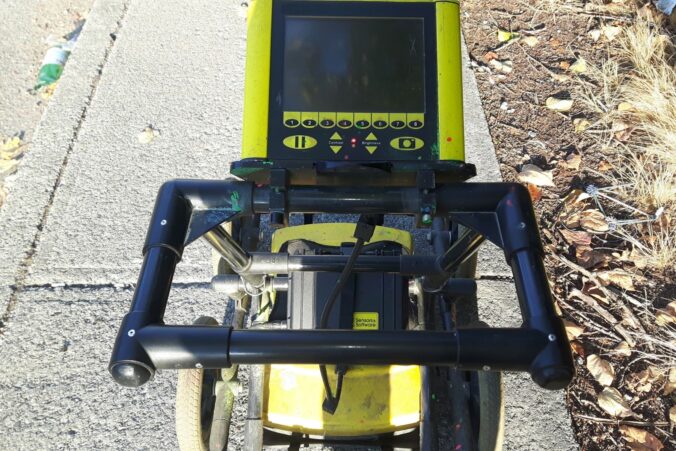
At its core, GPR uses electromagnetic waves to scan the ground and detect variations in subsurface materials. These signals bounce back to the surface when they encounter different structures, allowing technicians to interpret and map what’s below without excavation. This makes it especially useful in urban environments where digging can be costly, disruptive, and dangerous.
One of the primary advantages of GPR is its ability to locate underground utilities. In many projects, knowing the exact position of pipes, cables, and conduits is critical to avoiding damage and delays. GPR helps identify these features quickly and accurately, even in complex or congested subsurface conditions.
GPR is commonly used for:
- Locating buried utilities such as water lines, gas pipes, and electrical cables
- Detecting voids, sinkholes, and subsurface anomalies
- Scanning concrete structures for rebar, post-tension cables, and thickness
- Identifying buried objects or archaeological features
Another key benefit of GPR is its high-resolution imaging. Unlike traditional methods that may provide limited or indirect data, GPR produces detailed visual representations of subsurface features. This allows engineers and project managers to make more informed decisions based on clear and reliable information.
However, the effectiveness of GPR depends on several factors, including soil conditions and material composition. For example, dry sandy soils tend to produce better results, while clay-rich or highly conductive soils may reduce signal penetration. This is why experienced operators and proper interpretation are essential for accurate outcomes.
In construction and engineering projects, GPR plays a crucial role in pre-construction planning. By identifying potential obstacles early, teams can adjust designs, avoid costly rework, and ensure safer excavation processes. This proactive approach not only saves time but also significantly reduces project risks.
Ultimately, Ground Penetrating Radar is a powerful tool that combines speed, accuracy, and non-invasive testing. As technology continues to advance, GPR remains at the forefront of subsurface investigation, helping professionals uncover hidden conditions and move forward with confidence.